By Alyssa Thibodeau of Sterilite Corporation
April showers bring May flowers, and April bins can bring May grins! Spring is a great time to refresh the shelves, cabinets, and closets that have collected loose items throughout the year. Instead of trying to organize the entire home at once, start with one small space. A pantry shelf, bathroom closet, craft area, or cleaning-supply cabinet can become much easier to use when similar items are grouped together.
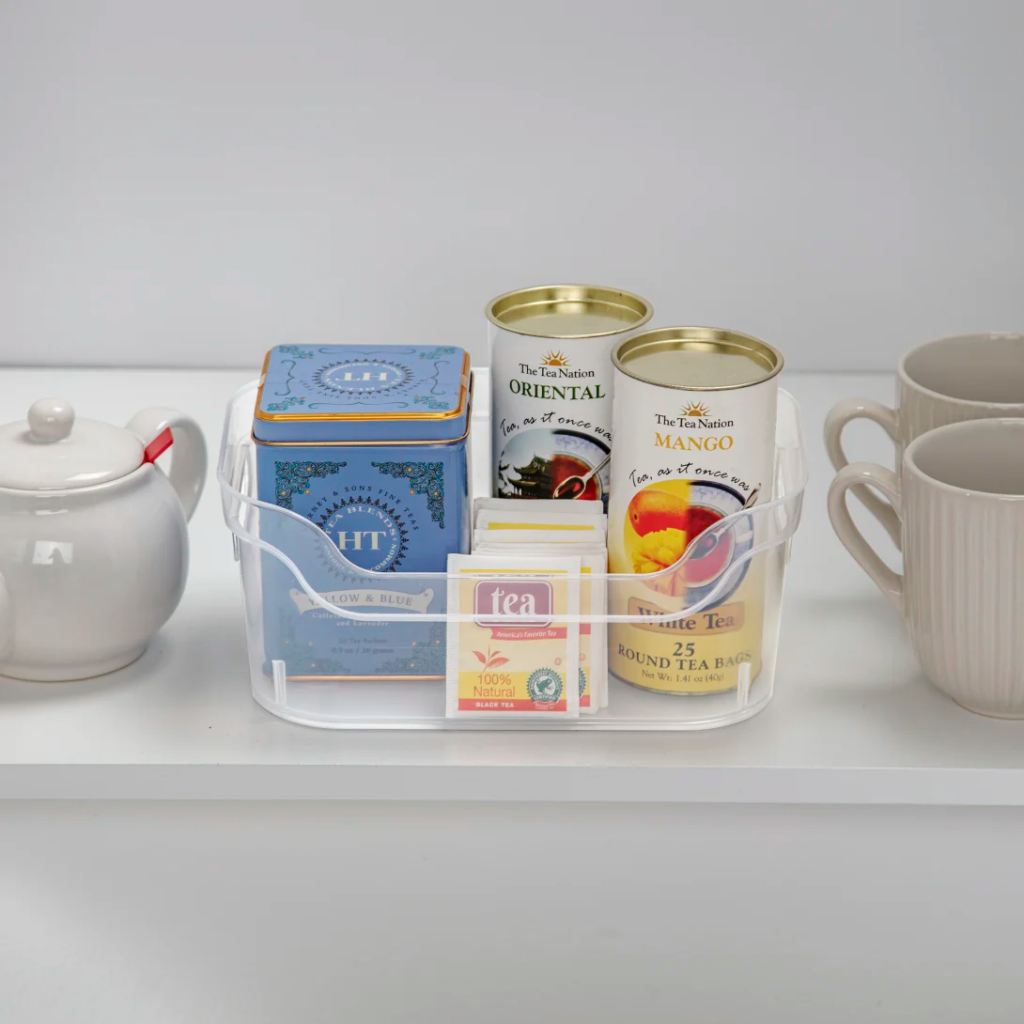
Open front storage bins are especially helpful for belongings you reach for often. Clear sides keep contents visible, while a scoop-front design makes items easier to access without removing the entire bin from the shelf.
Start With One Small Spring Organization Project
Choose one shelf, cabinet, or closet that could use attention. Remove everything so you can see what has accumulated, then sort the contents into four groups:
- Items to keep in the space
- Items that belong somewhere else
- Expired, empty, or unwanted items
- Items that need their own storage category
Once you know what will remain, group similar belongings together. Pantry snacks can stay with snacks, craft supplies can be sorted by activity, and beauty products can be separated by how often they are used. Avoid starting with the container. Choosing a bin after sorting helps you select a size that fits both the items and the available shelf space.
Choose the Right Open Bin Size
The original Open Bin family includes small, medium, and large options. Each size can serve a different purpose while maintaining a consistent look across shelves and cabinets. Before selecting a bin, measure the intended location and consider how frequently you use the contents.
Large Open Bin for Pantry and Cleaning Supplies
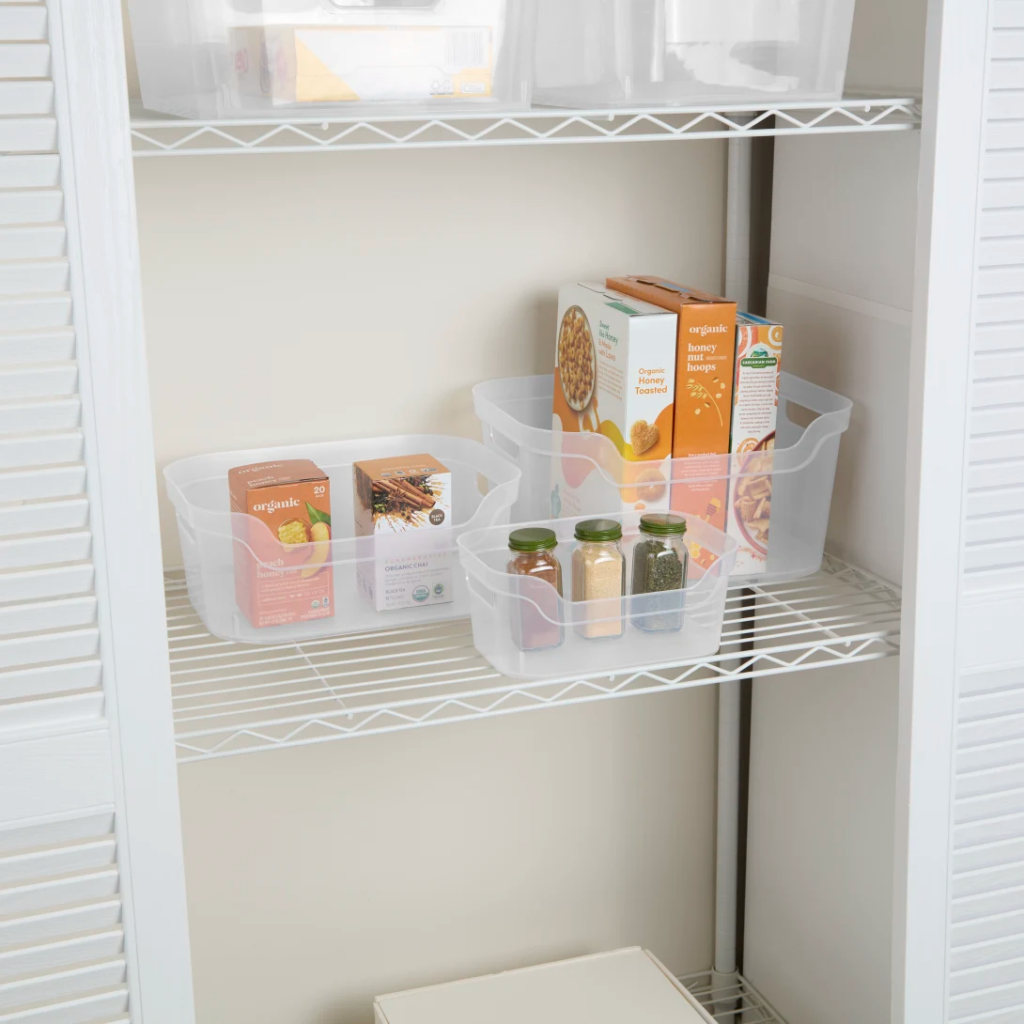
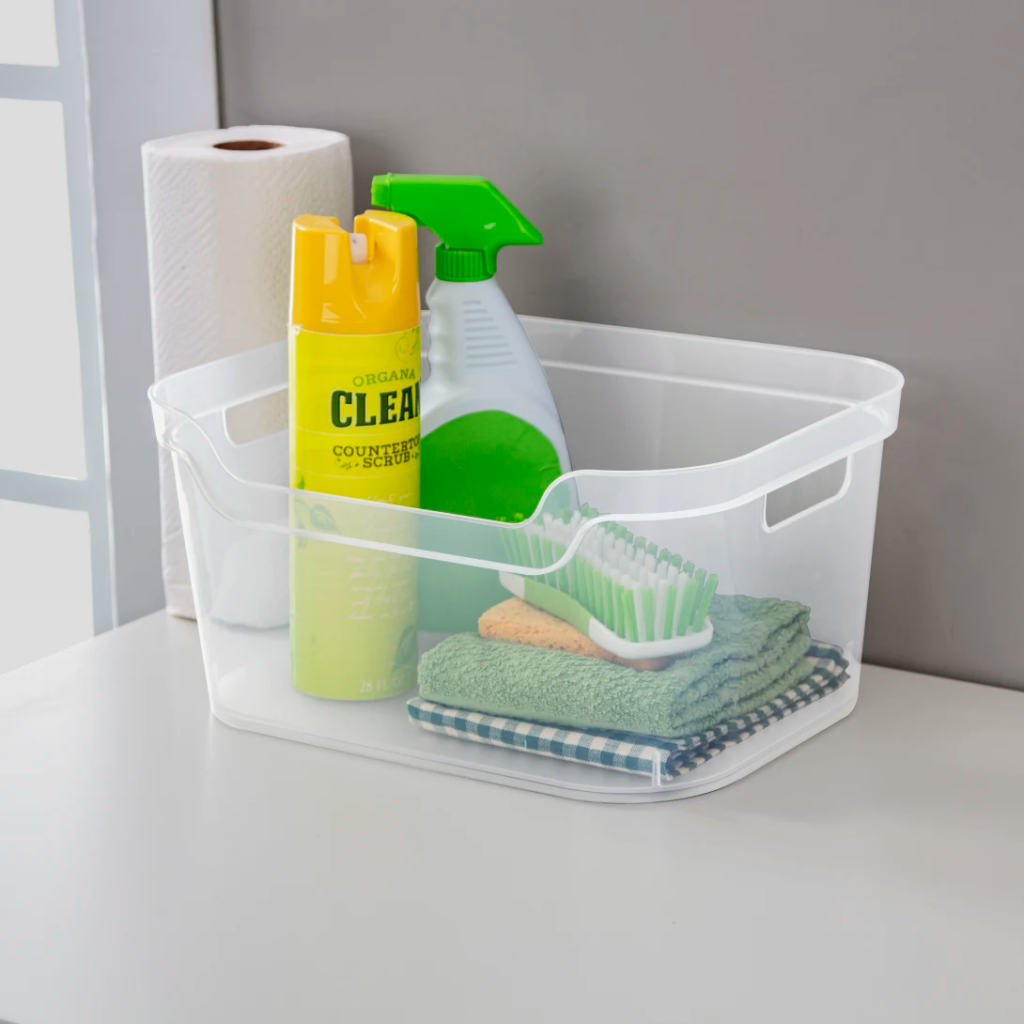
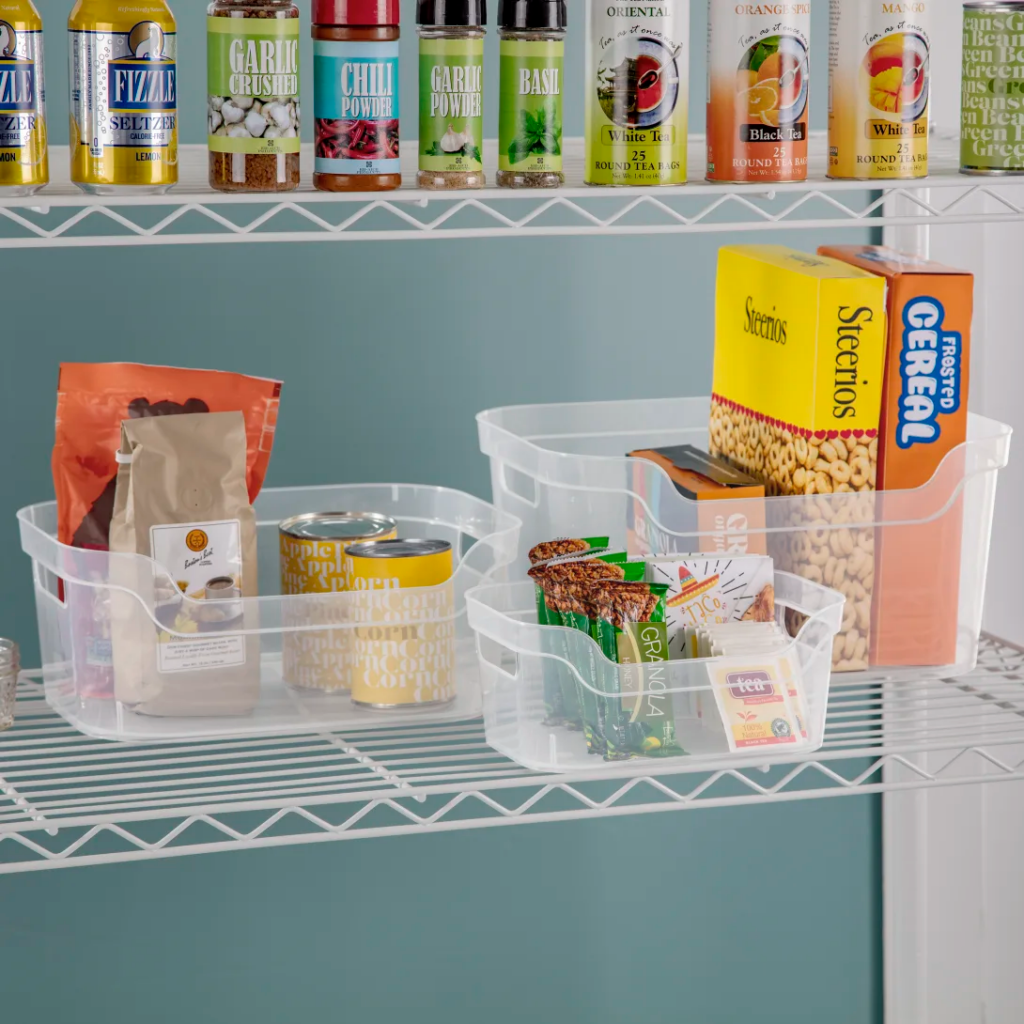
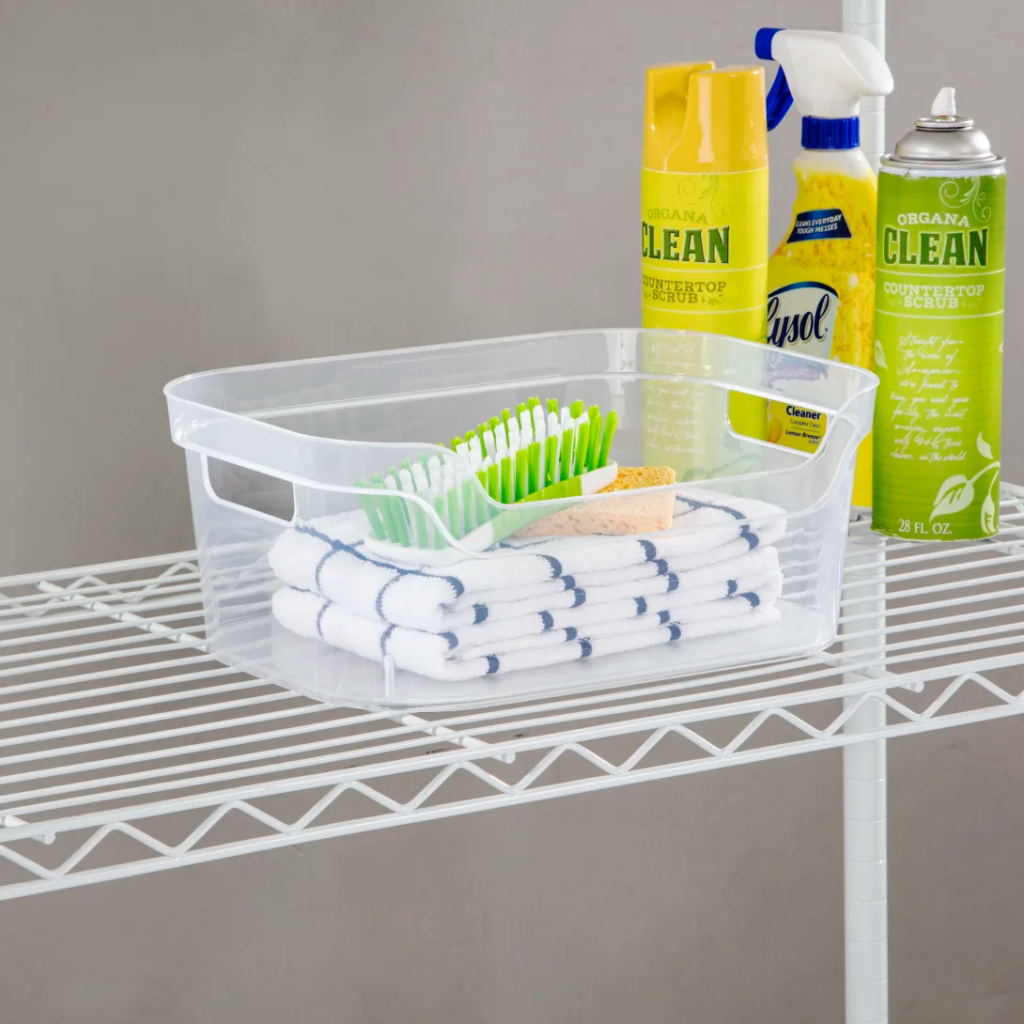
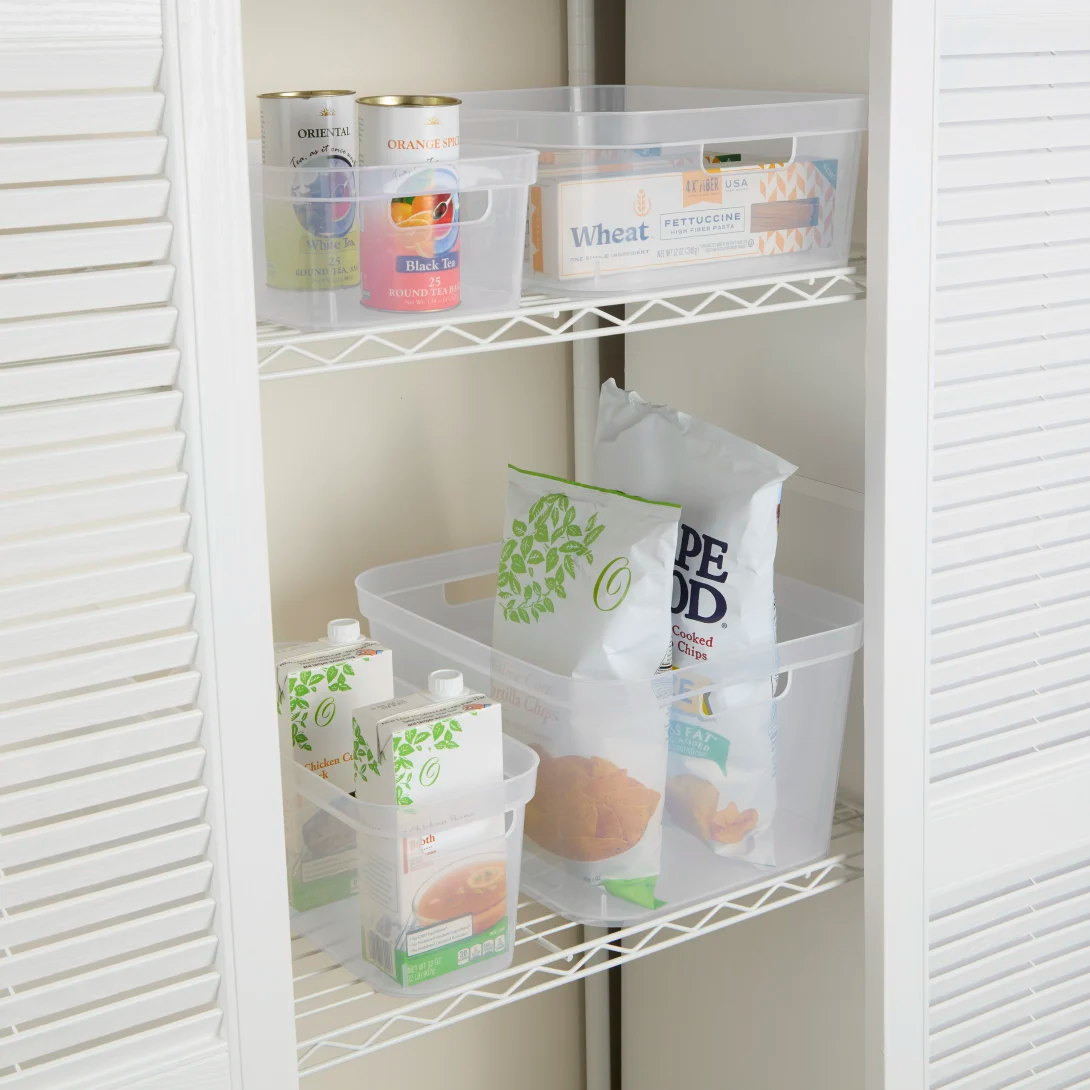
The Large Open Bin provides room for cereal boxes, snack bags, canned goods, cleaning products, and larger craft materials. Its clear sides keep stored items visible, while the scoop front provides access to frequently used items. Carry-through handles support lifting and moving the bin when needed.
In a pantry, consider assigning separate bins to categories such as:
- Breakfast items
- Packaged snacks
- Canned goods
- Baking supplies
- Backstock items
The same approach can work for cleaning products or craft materials. Giving each bin one purpose makes it easier to return items to the right place.
Medium Open Bin for Everyday Essentials
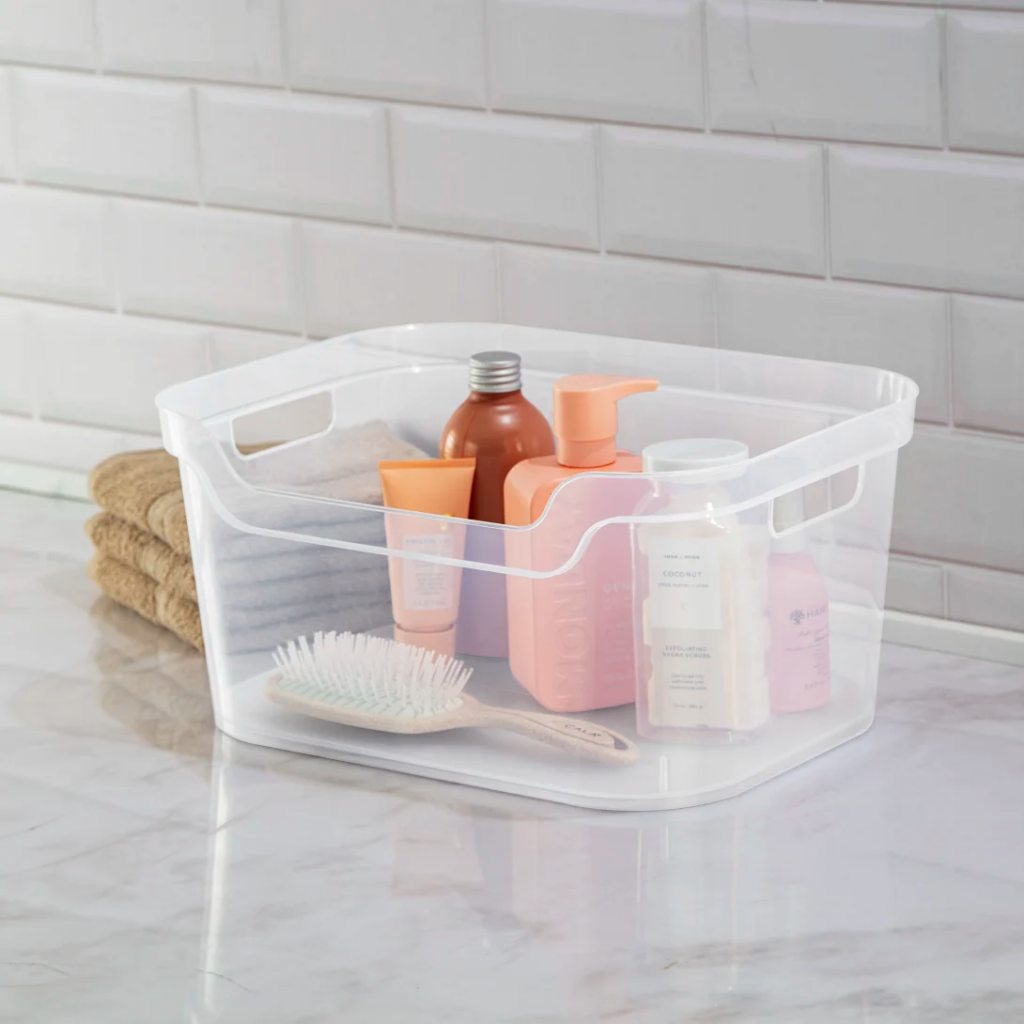
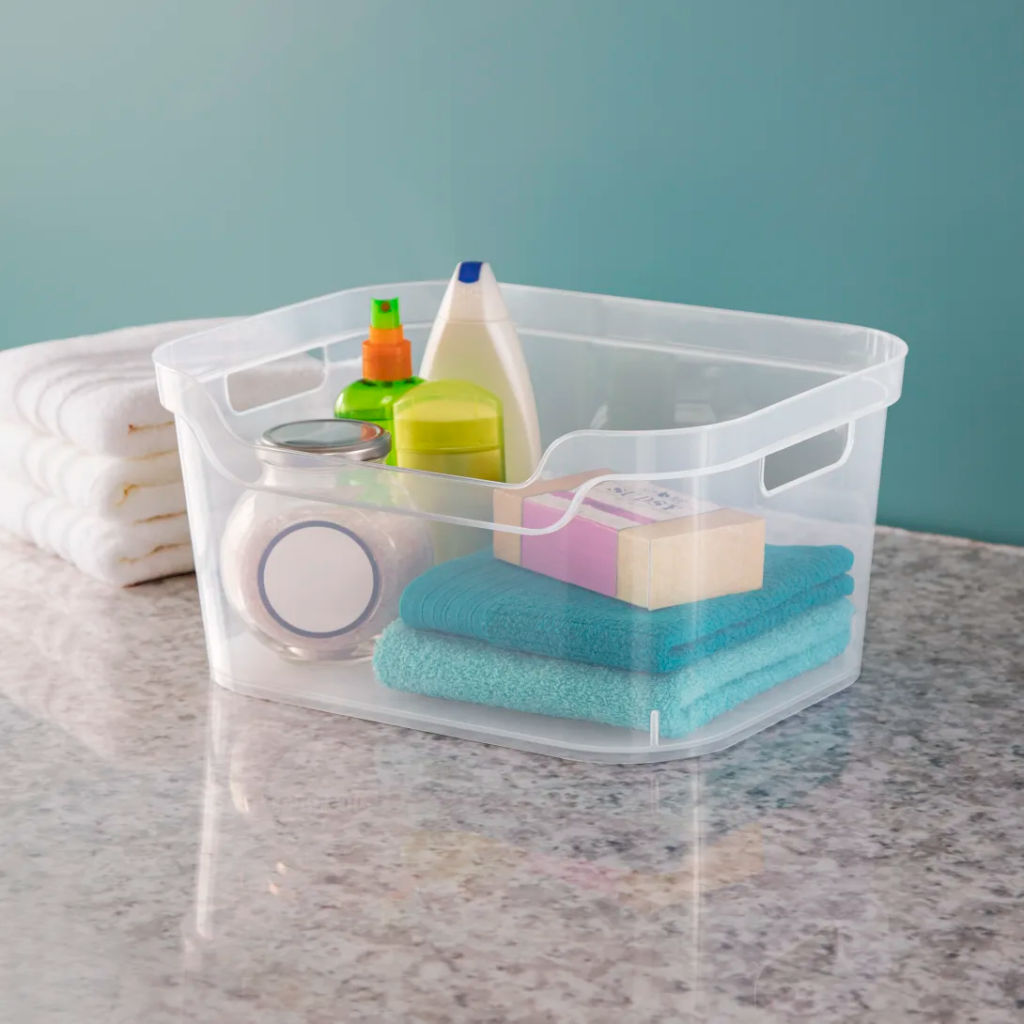
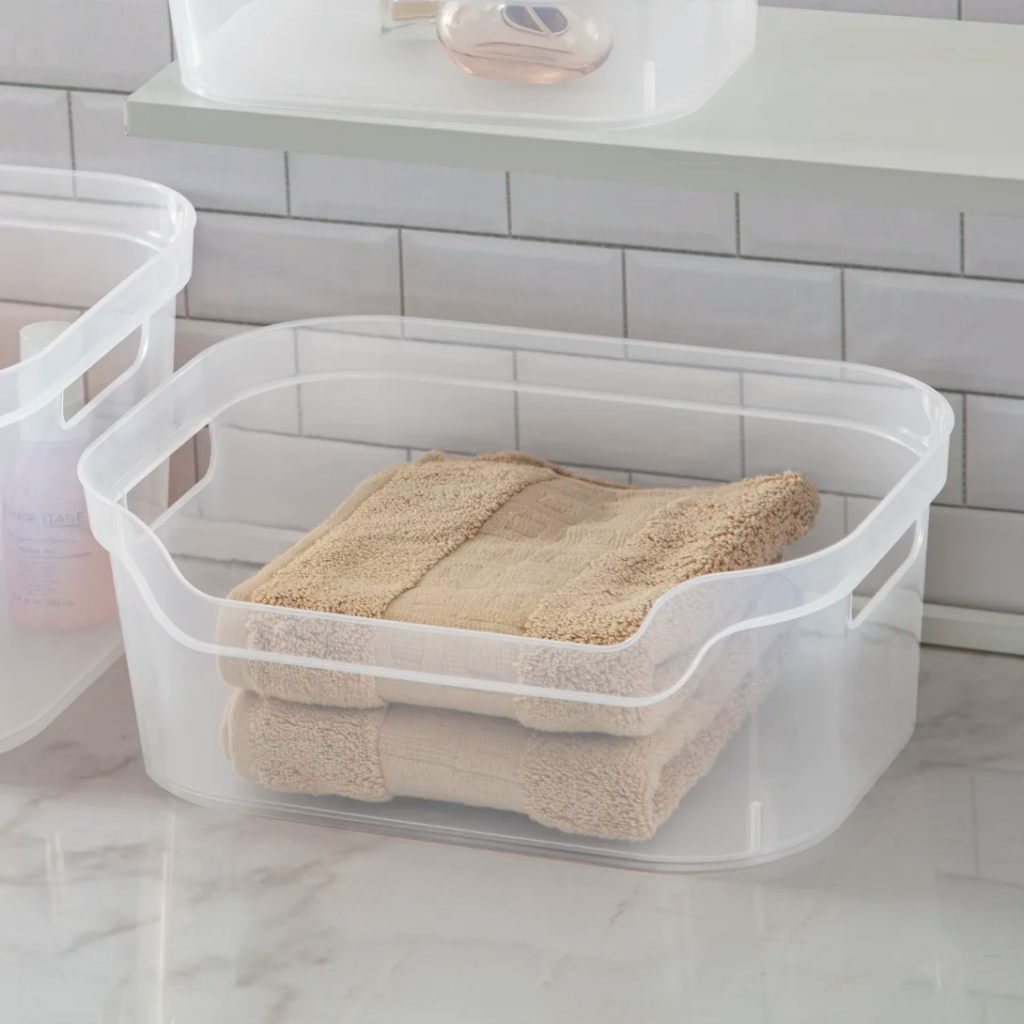
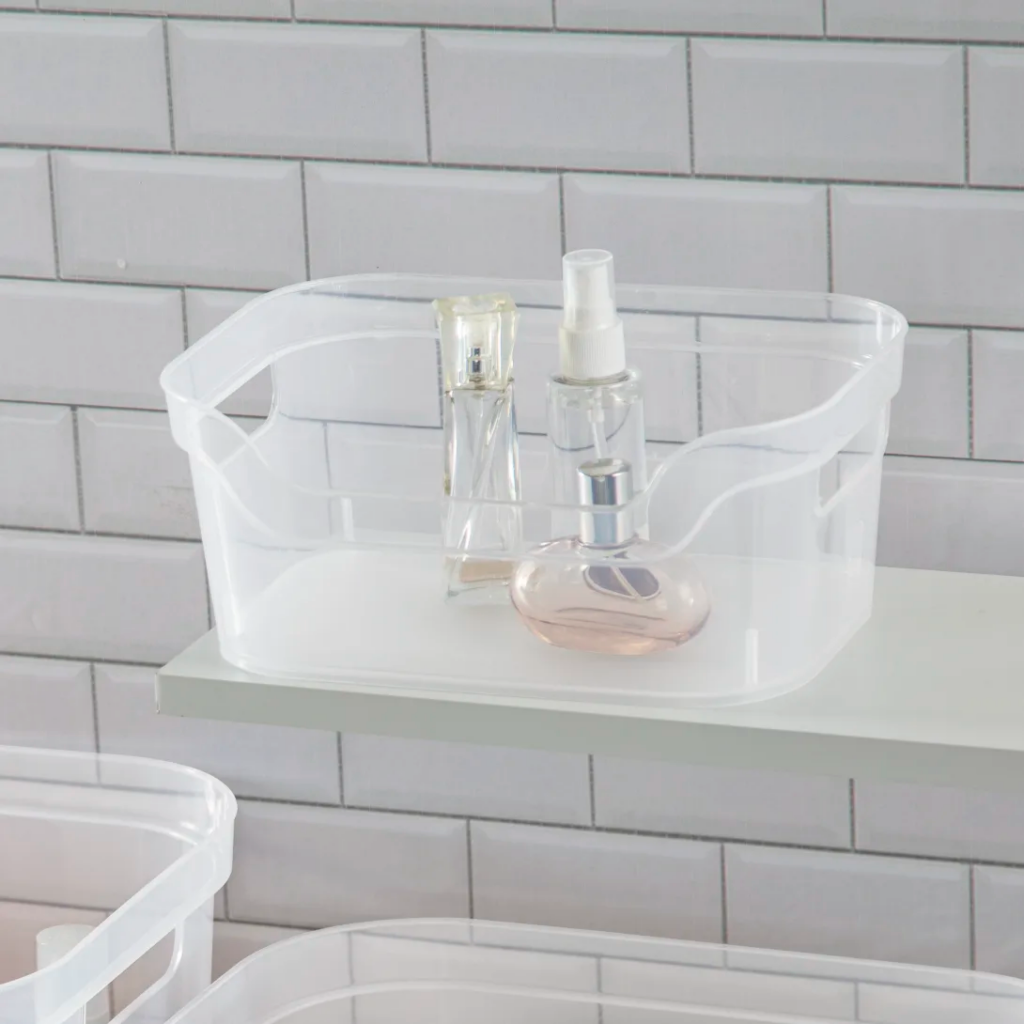
The Medium Open Bin can group snacks, juice boxes, canned goods, office supplies, craft materials, or hair and beauty products. Its clear sides and open front help keep frequently used belongings visible and accessible.
Use the medium size when the items need more room than a small bin provides but do not require the capacity of the larger option. It may work well for:
- Individually packaged snacks
- Hair products and accessories
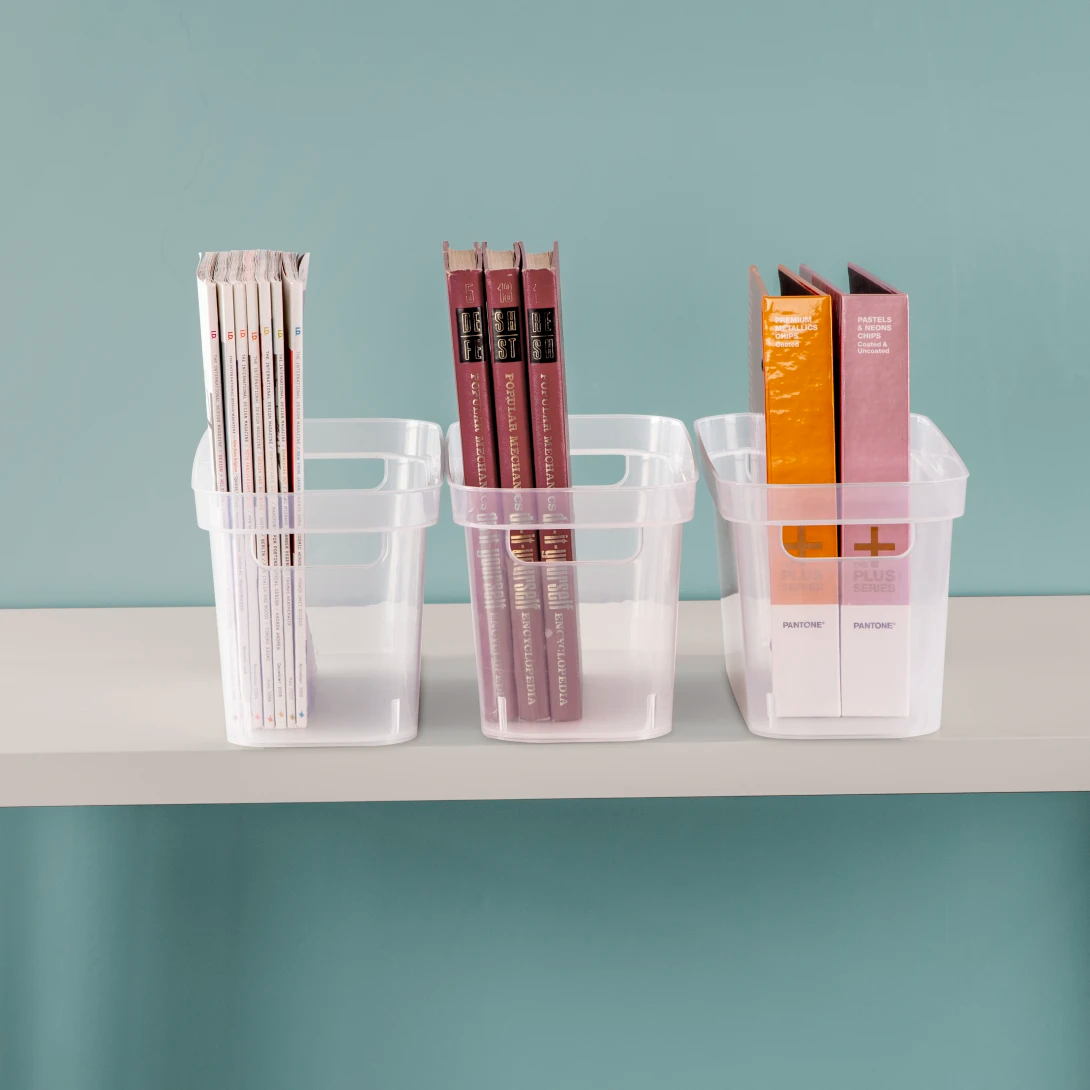
- Notebooks and office supplies
- Paints, brushes, and craft materials
- Small cleaning products
If your creative materials extend beyond one shelf or bin, explore additional ways to organize a larger collection of craft supplies and keep project materials accessible.
Small Open Bins for Compact Items
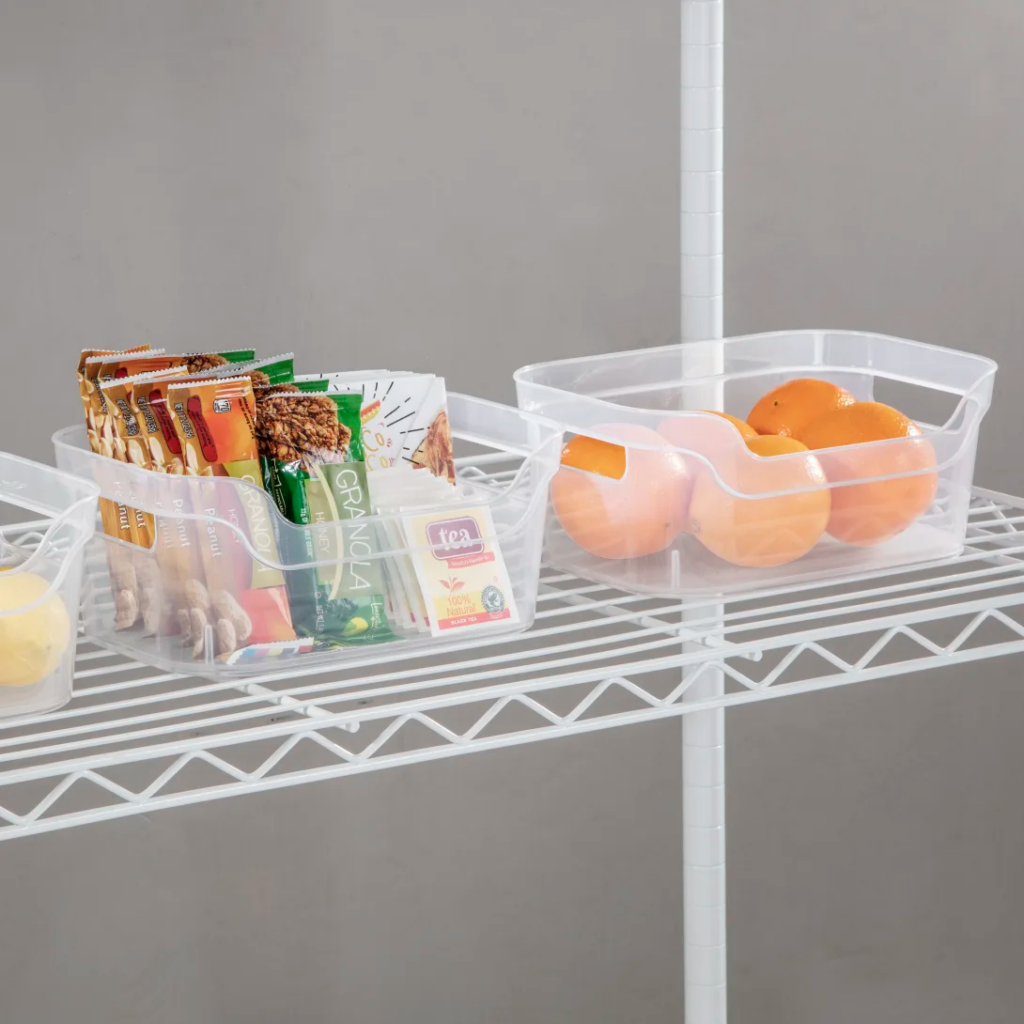
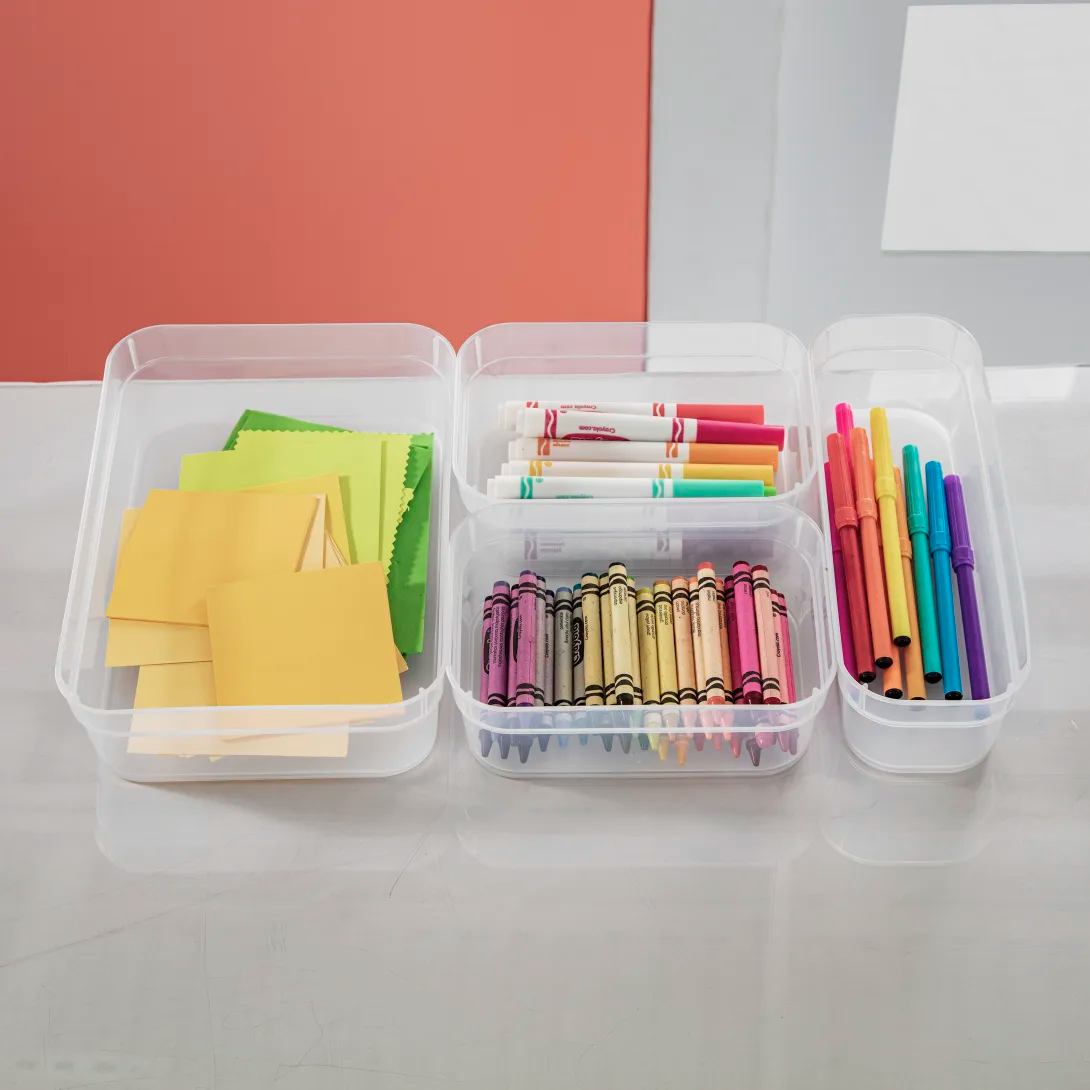
The Set of 2 Small Open Bins makes it possible to divide compact essentials into separate categories. The current product page supports uses involving snacks, juice boxes, pantry goods, office supplies, craft materials, and hair and beauty products.
Use the two bins together to separate related items. For example:
- Hair accessories in one bin and beauty products in the other
- Markers in one bin and crayons in the other
- Snack bars in one bin and juice boxes in the other
- Pens in one bin and small office supplies in the other
Keeping categories separate can prevent small belongings from getting lost among larger items.
Organize Open Bins by How You Use Them
An effective bin system should support the way you already use the space. Items needed every day should remain within easy reach, while less frequently used belongings can be placed higher or farther back.
Keep Frequently Used Items Accessible
Place everyday snacks, beauty products, office supplies, or cleaning materials where they can be retrieved without rearranging the entire shelf. Avoid overfilling the bins. Leaving enough room to move items in and out will make the system easier to maintain.
Use Clear Categories
Give each bin a specific category rather than using it as a catch-all. If several bins look alike, add simple labels that describe their contents.
Useful labels might include:
- Breakfast
- Snacks
- Hair care
- Cleaning cloths
- Craft tools
- Office supplies
Labels should clarify the system, not make it more complicated. If the contents are already easy to identify through the clear sides, adding a label may not be necessary
Reset the Space Regularly
A quick seasonal reset can keep the system from becoming cluttered again. Remove expired pantry goods, empty beauty products, dried-out craft supplies, and items that have migrated into the wrong bin.
Once the first shelf or cabinet is complete, repeat the process in another small area. Focusing on one manageable zone at a time can make spring organization feel more achievable.
Keep the Spring Refresh Going
Open front storage bins work best for frequently used indoor belongings that benefit from visibility and easy access. By sorting first, selecting an appropriate bin size, and assigning each container one purpose, you can create a system that is simple to understand and maintain.
When you are ready to move beyond pantry shelves, bathroom closets, and craft areas, explore larger spring storage projects for garages, basements, seasonal clothing, tools, and sporting equipment. That broader guide focuses on heavy-duty totes and bulkier storage needs.
Enjoy the season, enjoy your refreshed space, and let April bins bring plenty of May grins!